Modular village
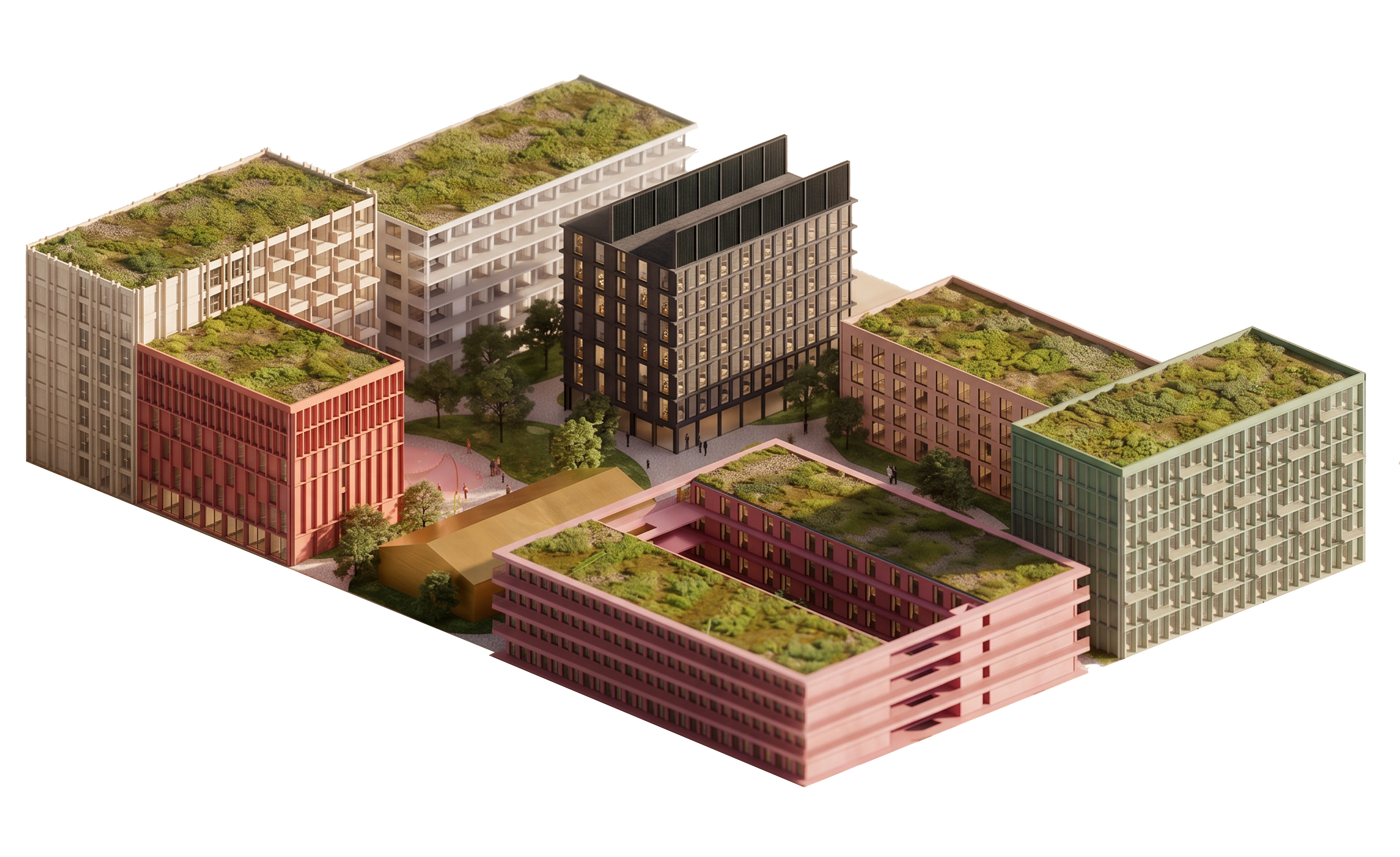
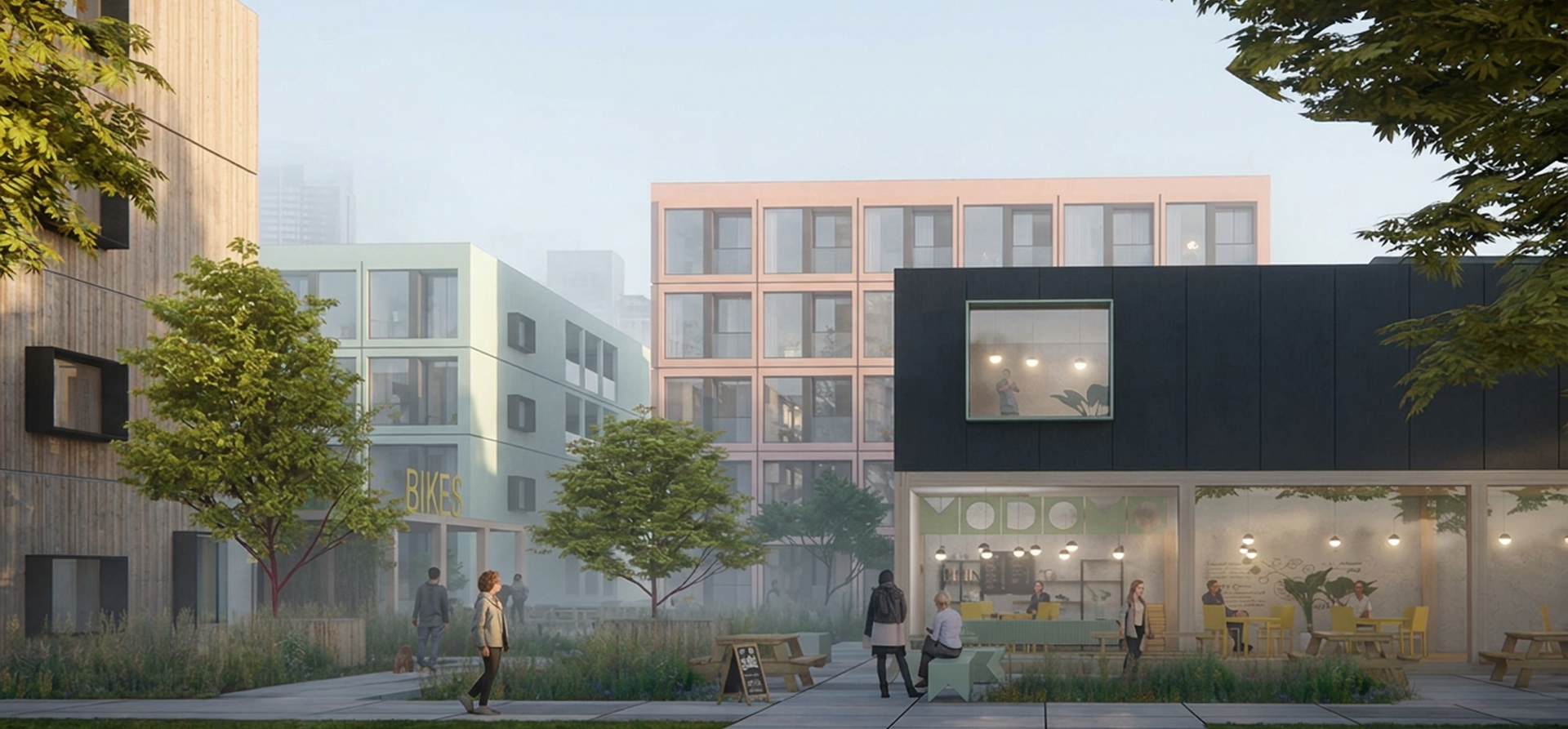
Located on the edge of Utrecht’s city center, this modular village is designed to cultivate a distinct neighborhood identity and attract a diverse community. Developed for Modomo in response to the housing crisis, the project delivers affordable, high quality meanwhile housing. Beyond providing comfortable living spaces constructed from healthy materials like cross laminated timber and engineered wood, the design prioritizes social cohesion. A central urban square featuring a community center, bike shop, and workspace anchors the site, transforming a previously remote location into a vibrant hub where residents can easily connect and feel at home.
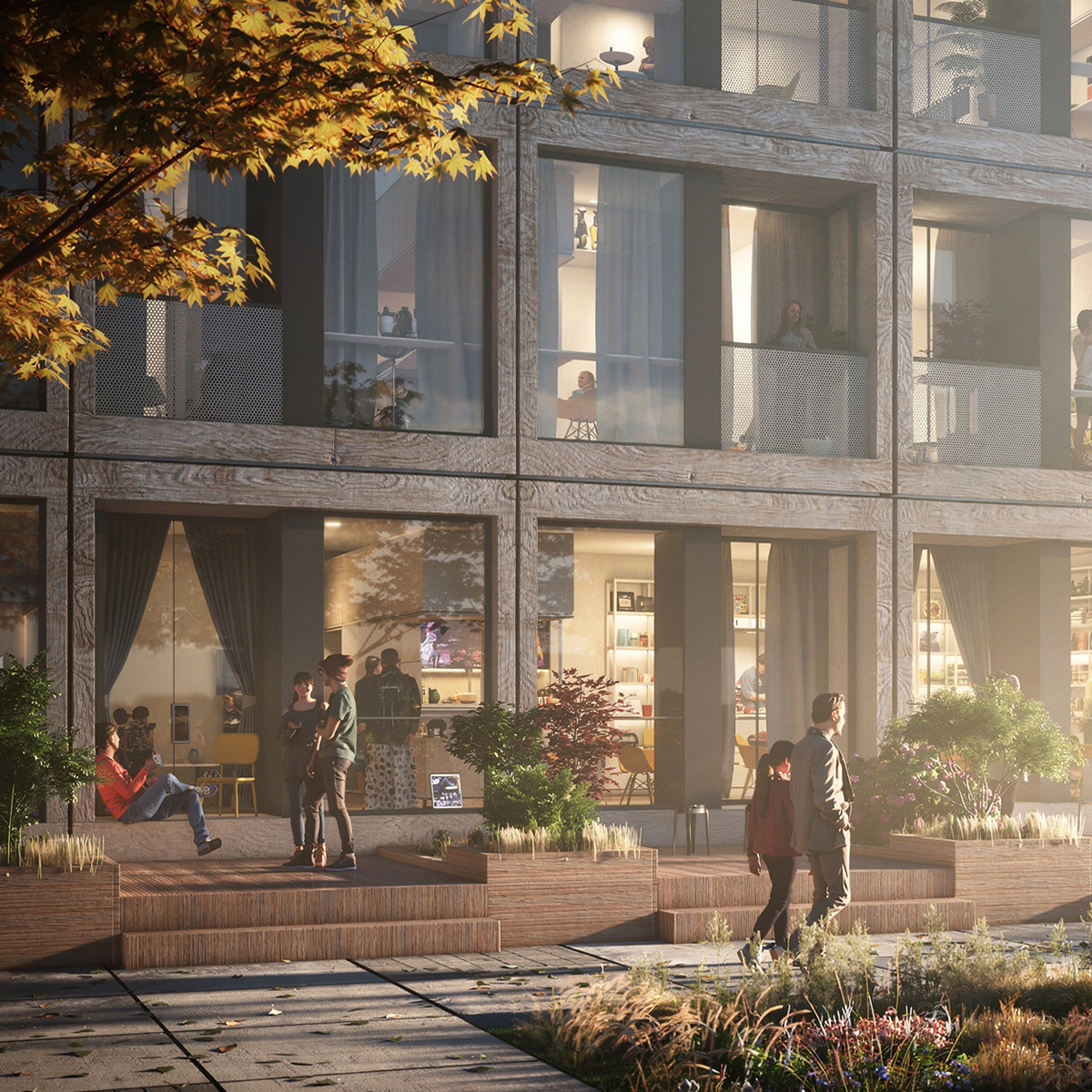
The development relies on fully prefabricated modules manufactured off site. Each unit is assembled in a factory complete with a bathroom, kitchen, storage, integrated plumbing and ductwork, and its facade. Sized specifically to fit on standard trucks, the finished modules are transported by road and rapidly assembled on site. This highly efficient and cost effective construction method significantly reduces build time, freeing up both spatial and financial resources to invest back into the public spaces and community square.
Block A
Client: MODOMO (London)
Project: Modular village
Location: Utrecht, Netherlands
Location: Utrecht, Netherlands
Program: Masterplan, housing, bike shop, community hub, landscape
Size: 500 apartments - 9 buildings
Status: Concept masterplan in progress
Status: Concept masterplan in progress
Team: Design by Matter Makers with partners A-W-R and Buro Mee and Redscape (Landscape)
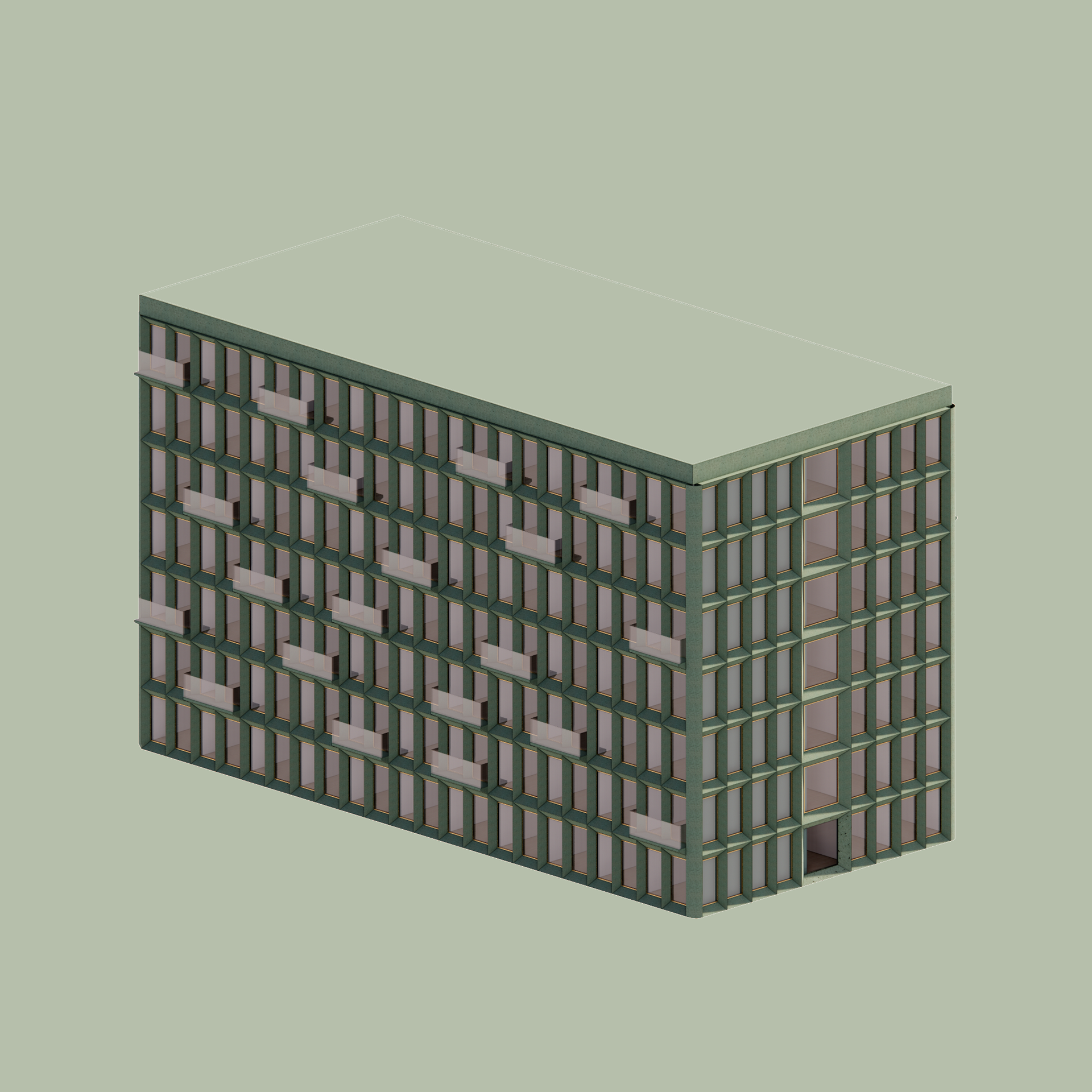
Block E
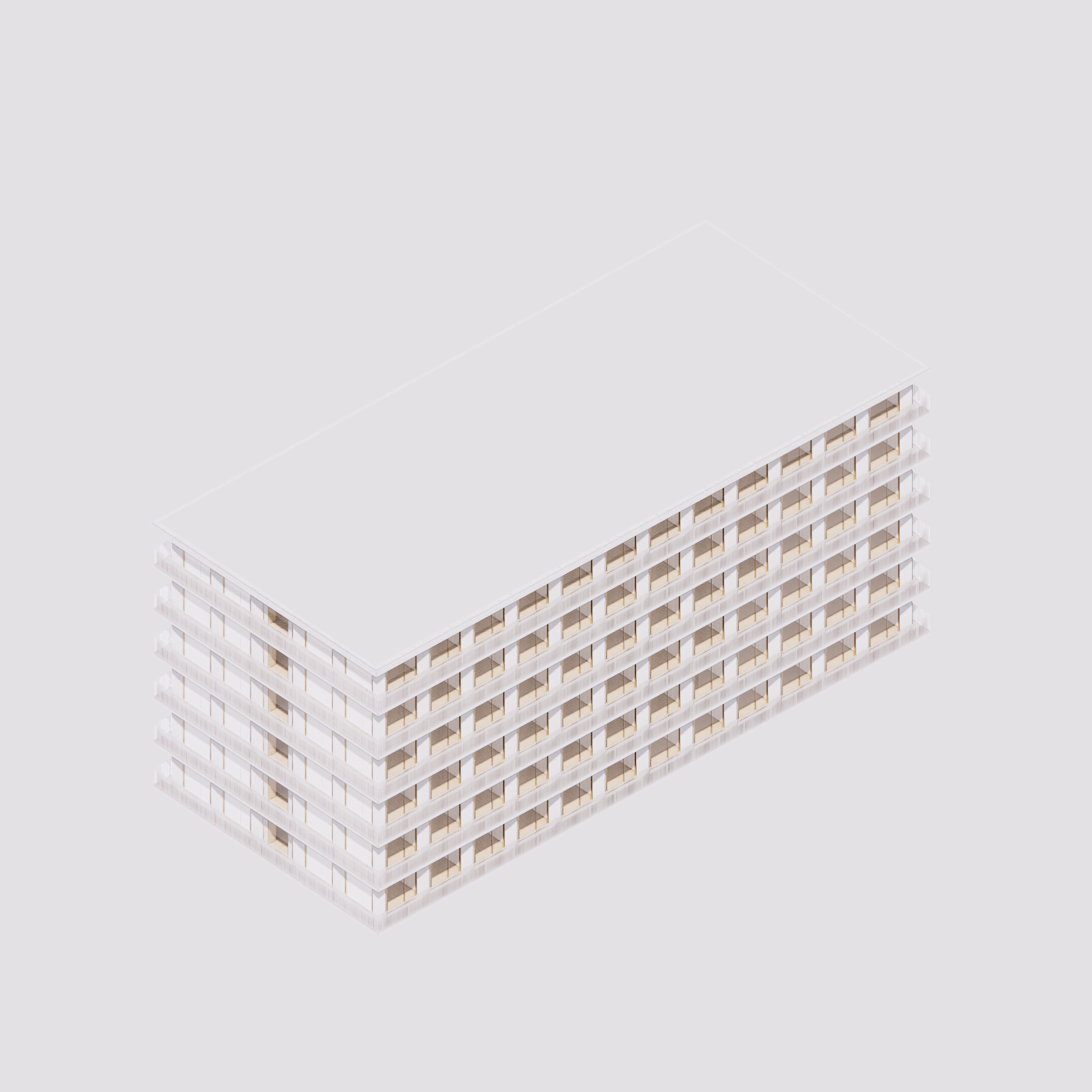
Block C
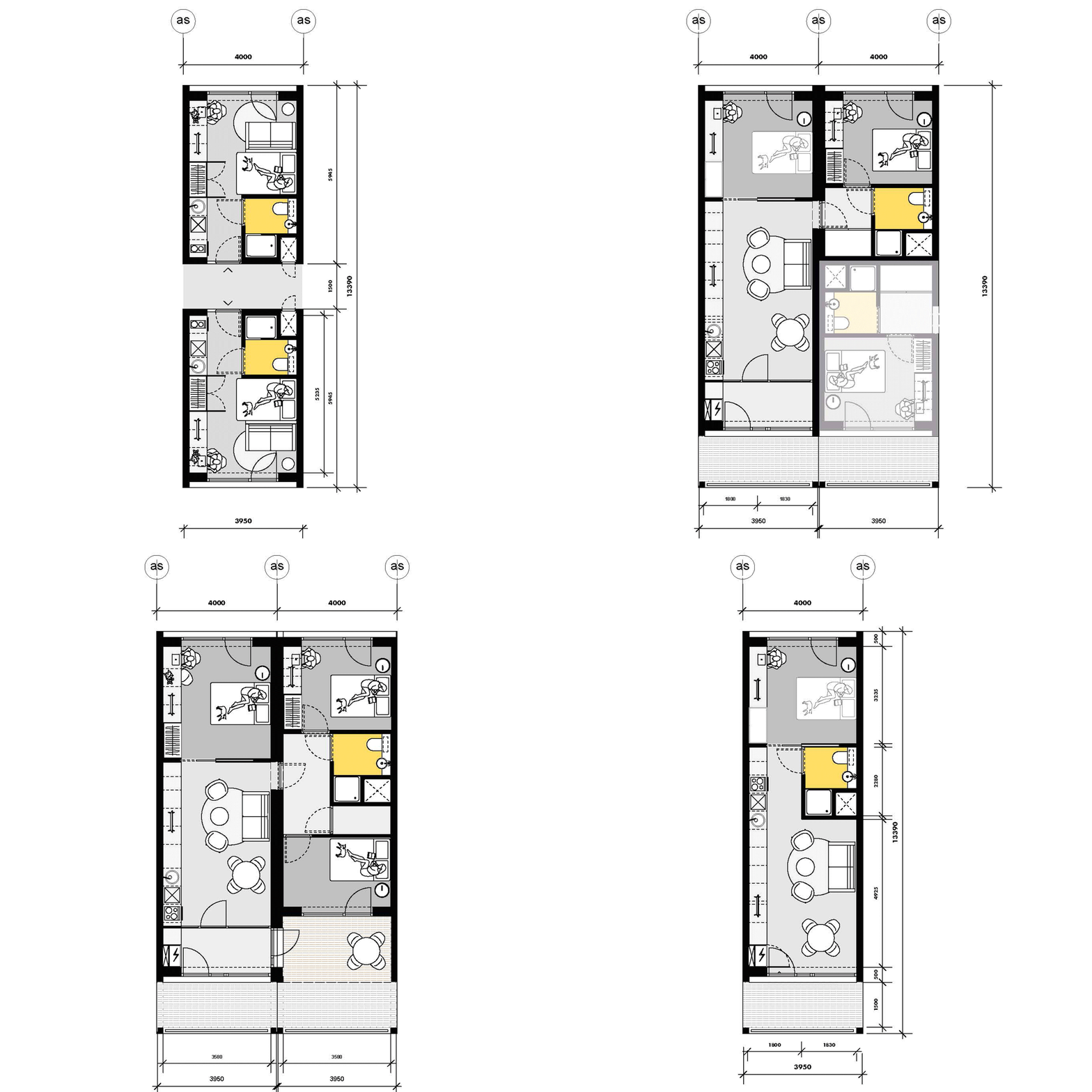
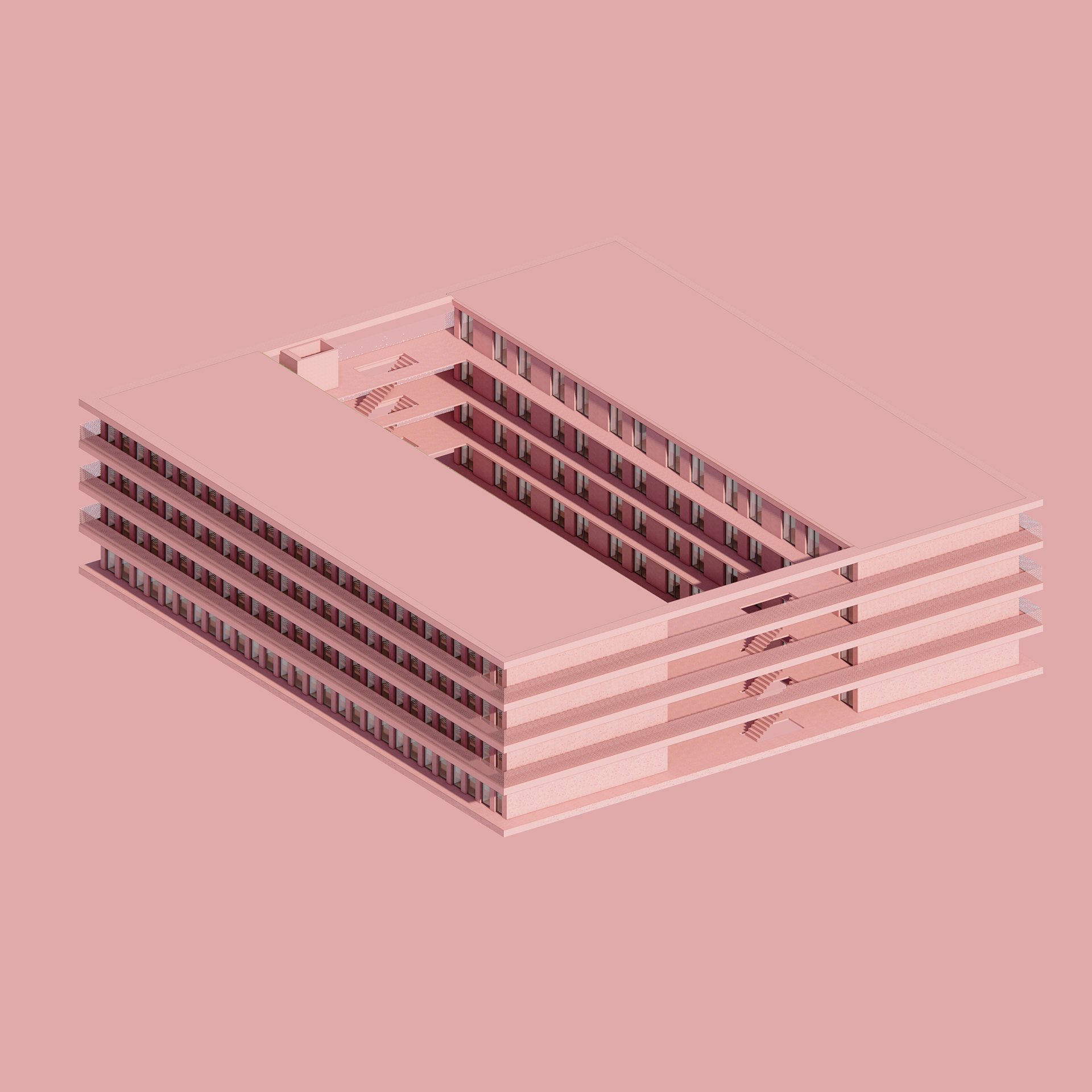
This modular system is designed for maximum adaptability and zero waste. Individual units can be seamlessly combined to create larger or smaller apartments based on changing needs, resulting in a highly versatile range of housing types. These modules can be arranged around central corridors or inner courtyards, with footprints that scale easily depending on specific plot dimensions. Furthermore, because the units utilize dry connections, their exterior fronts can be removed and swapped to suit different local conditions or aesthetic contexts much like the interchangeable faceplates on classic Nokia phones. Rooted entirely in circular building principles, the complete structure can eventually be dismantled and relocated to a new site without wasting any material.
Ultimately, this project represents a forward thinking blueprint for urban design. By blending sustainable construction techniques with a deep commitment to shared public spaces, the village provides an immediate and dignified response to urban housing shortages. It proves that temporary architecture can still deliver enduring value, fostering a true sense of belonging for residents while respecting the environment through fully circular engineering.