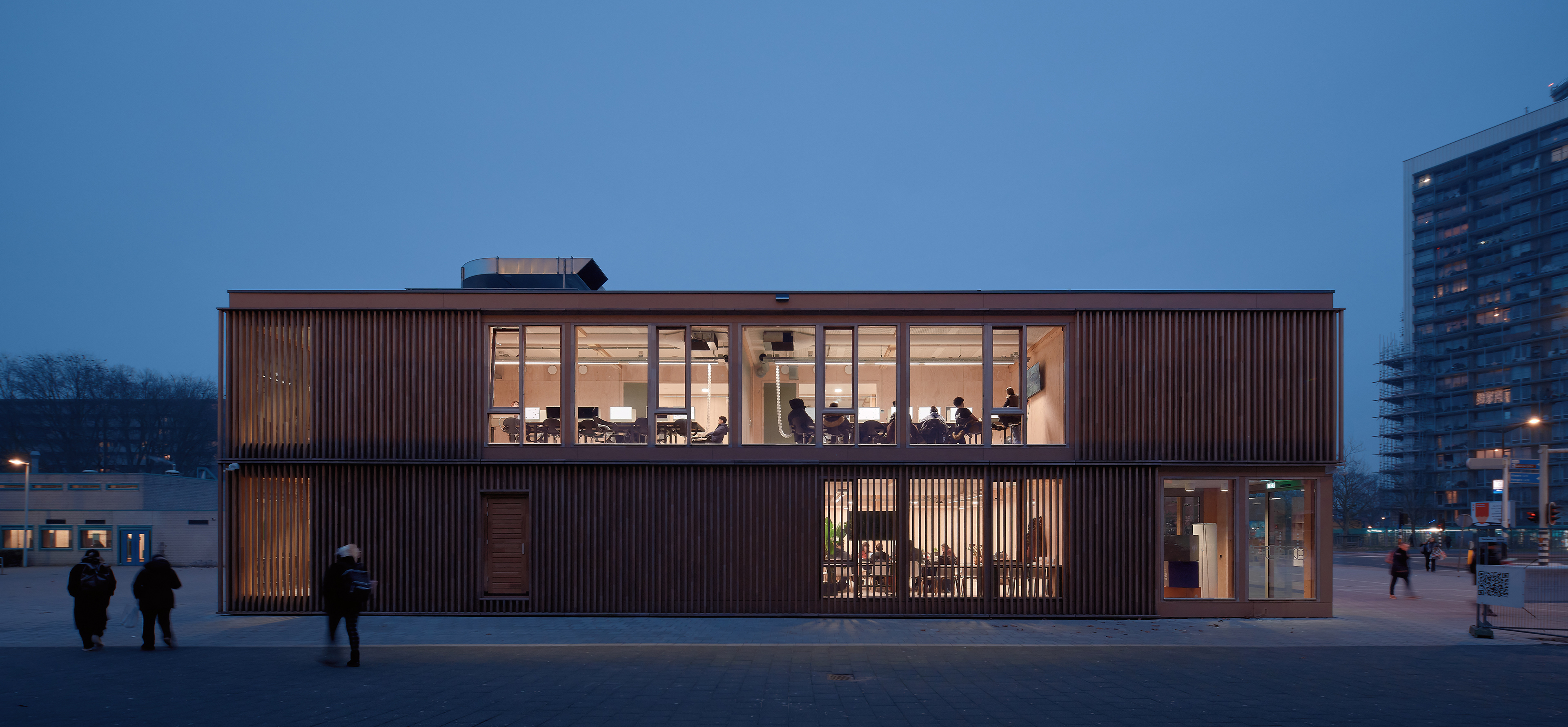
OBA library in the evening
OBA Next Lab
OBA Next Lab challenges the traditional definition of a library. Functioning as a library, workshop, café, platform, and pop-up stage all at once, its fluid program serves the wider Amsterdam Zuidoost area. Commissioned by OBA (Amsterdam’s Public Library), this 1,175-square-meter project is a dynamic social infrastructure designed to evolve with its community over a planned seven-year lifespan, after which it will be dismantled and relocated.
A magnet for the community
The project confronts multiple challenges: engaging a digitally native, culturally diverse generation, and creating architecture that is simultaneously temporary, circular, and embraced by the neighbourhood. By introducing a central "living room" featuring a light-filled atrium and a sculptural topography, the building becomes a natural magnet for anyone wanting to meet, learn, or simply connect.
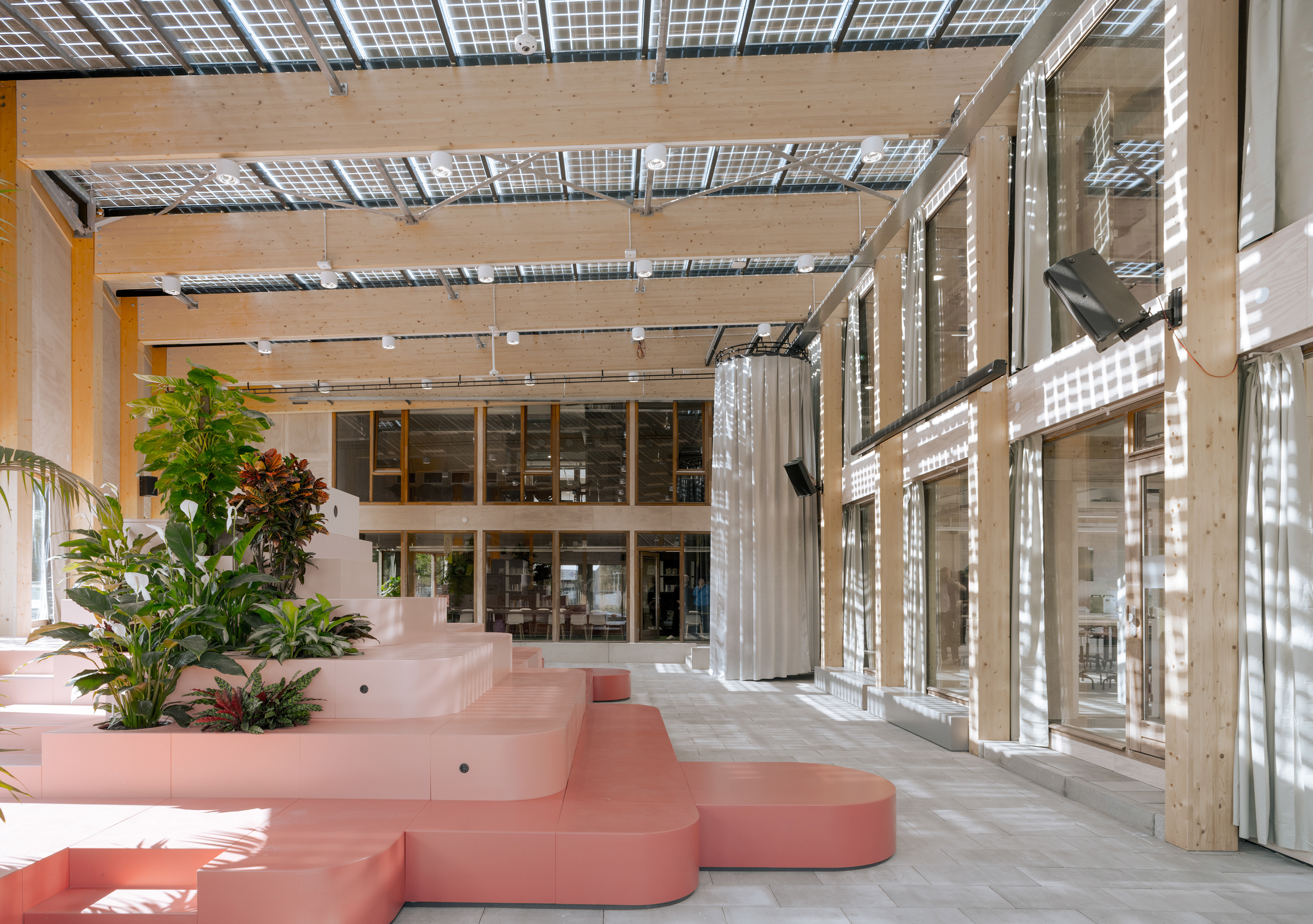
Central atrium with multifunctional object
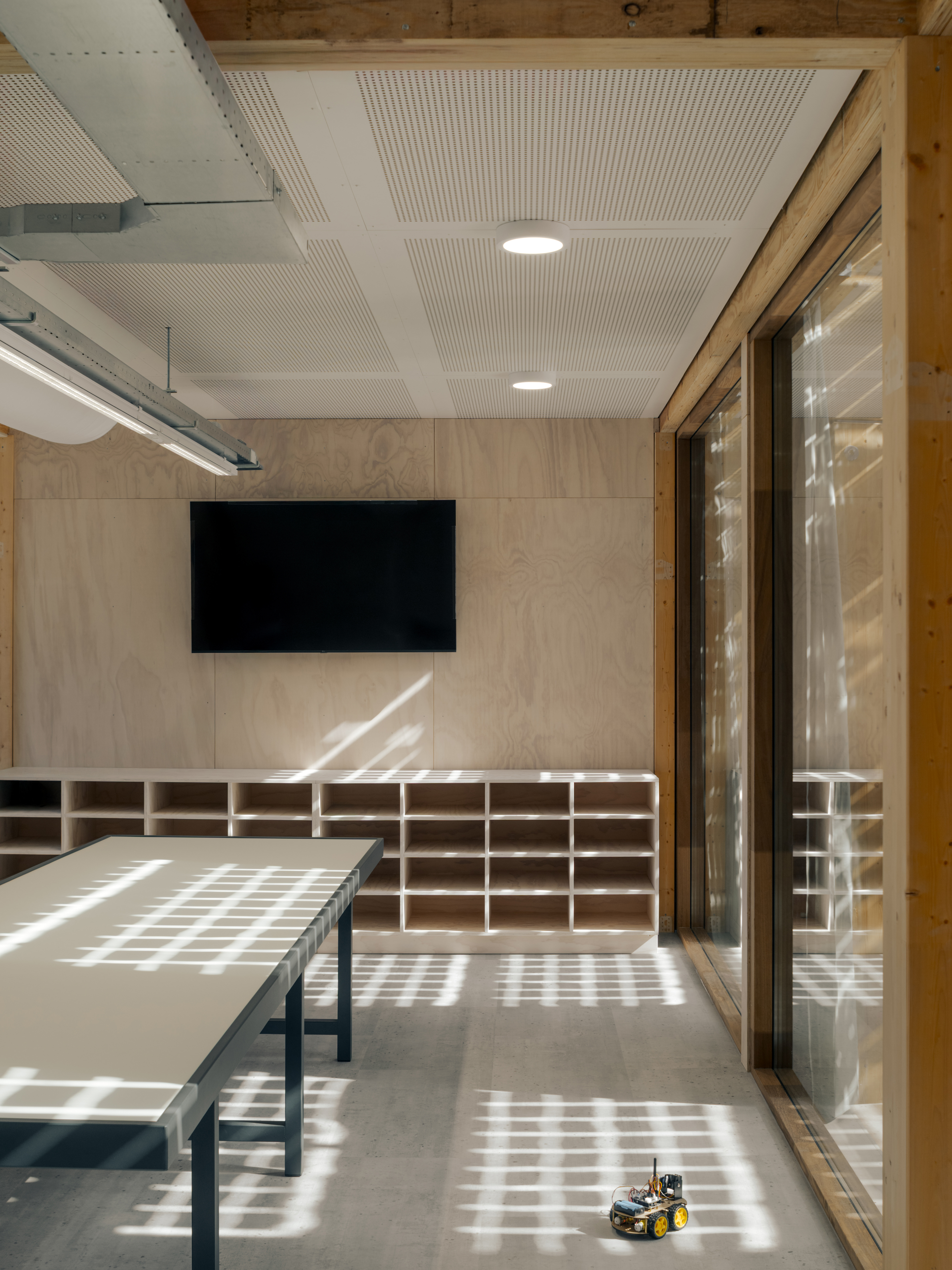
Robotica room
Client: OBA (Public library Amsterdam) and TUMO
Project: Oba next lab Kraaiennest
Location: Amsterdam, Netherlands
Location: Amsterdam, Netherlands
Program: Library, Cinema, Bar/Cafe.
Size: 1.175 m2
Status: Completed 2026
Status: Completed 2026
Team: Design by Matter Makers in collaboration with
A-W-R and Baz_studio. IMD (structure), Vink bouw (contractor), Atelier bouwkunde (engineering), Laureco (advisor building physics).
Pictures: Riccardo de Vecchi (alll except first one), Melchior Overdevest (first one)
The Learning Hill
Organised around spatial and social openness, the building connects seamlessly with its surroundings. The central "learning hill" acts as both seating and topography, beginning inside and flowing outward into the public square to blur the boundary between the city and the interior. Located next to the busy Kraaiennest metro station, the building provides a bright, welcoming anchor for the area. Rather than dominating the square, it naturally completes it.
The future is wood
Located next to the busy Kraaiennest metro station, the building provides a warm, welcoming anchor for the area. In an area dominated by concrete and hard surfaces, this wooden building stands out as a positive change ready for the future of libraries where community development and learning go hand in hand.
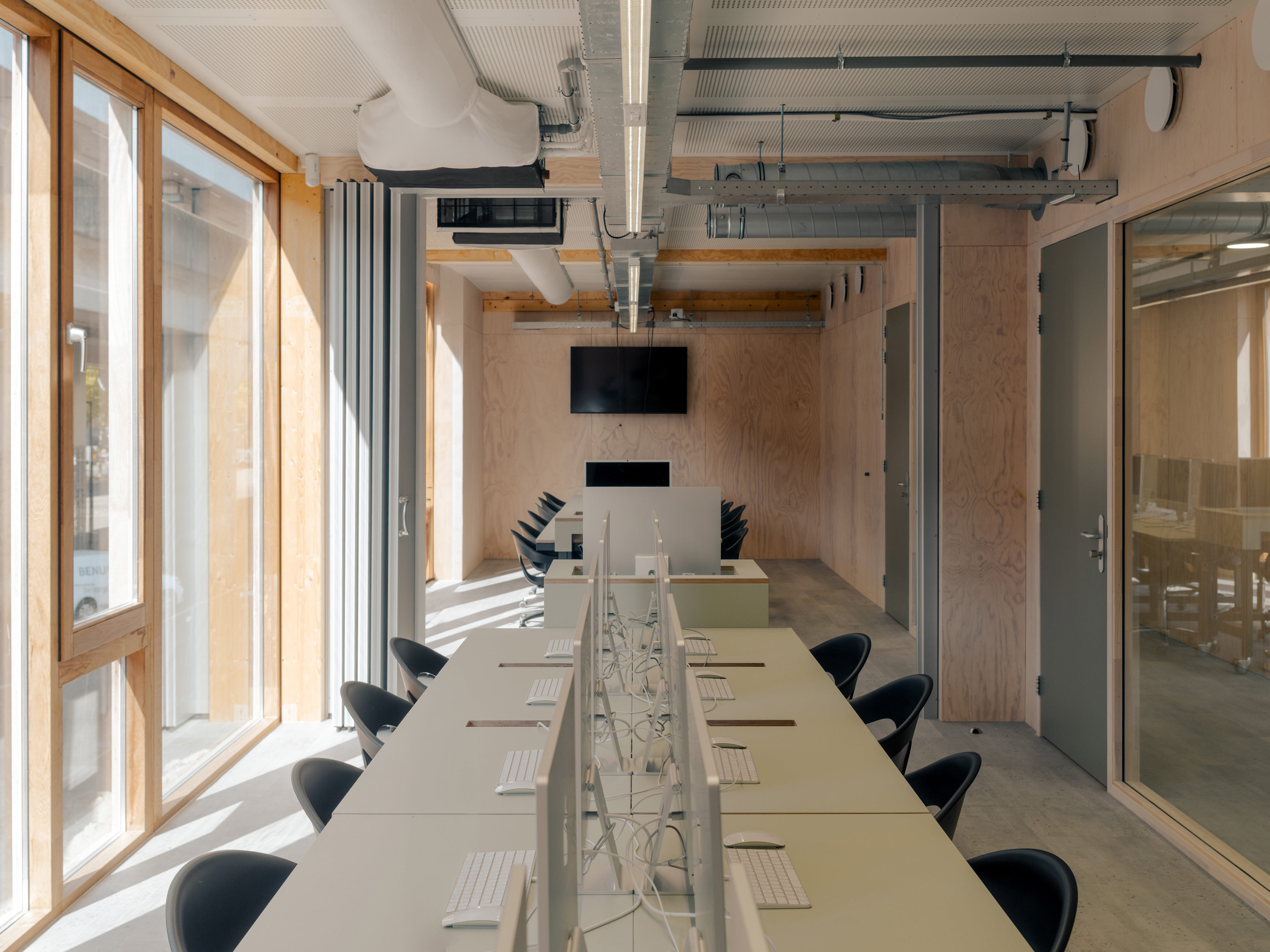
Learning room with retractable wall
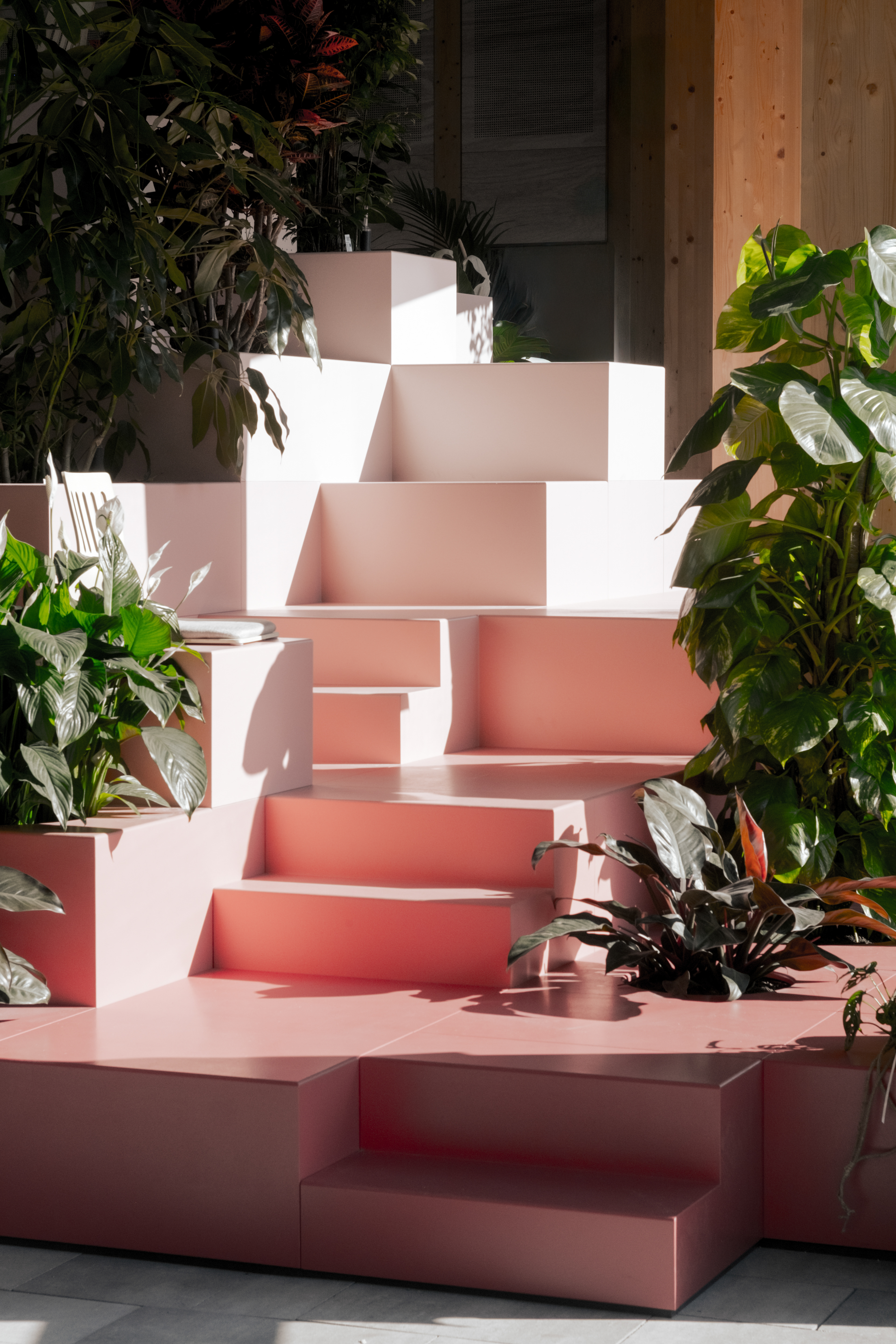
The learning hill with hidden reading nooks
Reprogrammable by design
The large, pavilion-like glass atrium faces the public square. During the day, it invites visitors to play, read in a hidden corner, or participate in workshops. In seconds, a single giant curtain and hidden retractable roller blinds can reprogram the space, transforming it into a cinema or live music venue.
Inside, the design rejects formal reading rooms and silent zones in favor of informality. Reflecting a generational shift in how knowledge is shared, the space supports a broad range of cultural activities: coding, music production, virtual reality, group work, performances, and casual socialising.
Other spaces can be reconfigured with retractable walls and movable furniture to adapt to the needs of the day, with all cabling routed through central ceiling canals to ensure maximum flexibility.
Circular construction
Though designed for a temporary location, the building is deliberately robust and environmentally conscious. The design relies entirely on dry-fit connections, allowing components to be dismantled and reused without damage.
Zero-Waste Assembly: Constructed from prefabricated timber panels placed on Stelcon slabs, the design avoids poured concrete, glue, and welding entirely.
Low-Impact Logistics: The project's carbon footprint is heavily reduced through flat-pack logistics, a single-truck delivery for all cross-laminated timber (CLT) elements, alongside repurposed materials such as photovoltaic cells from a previous building.
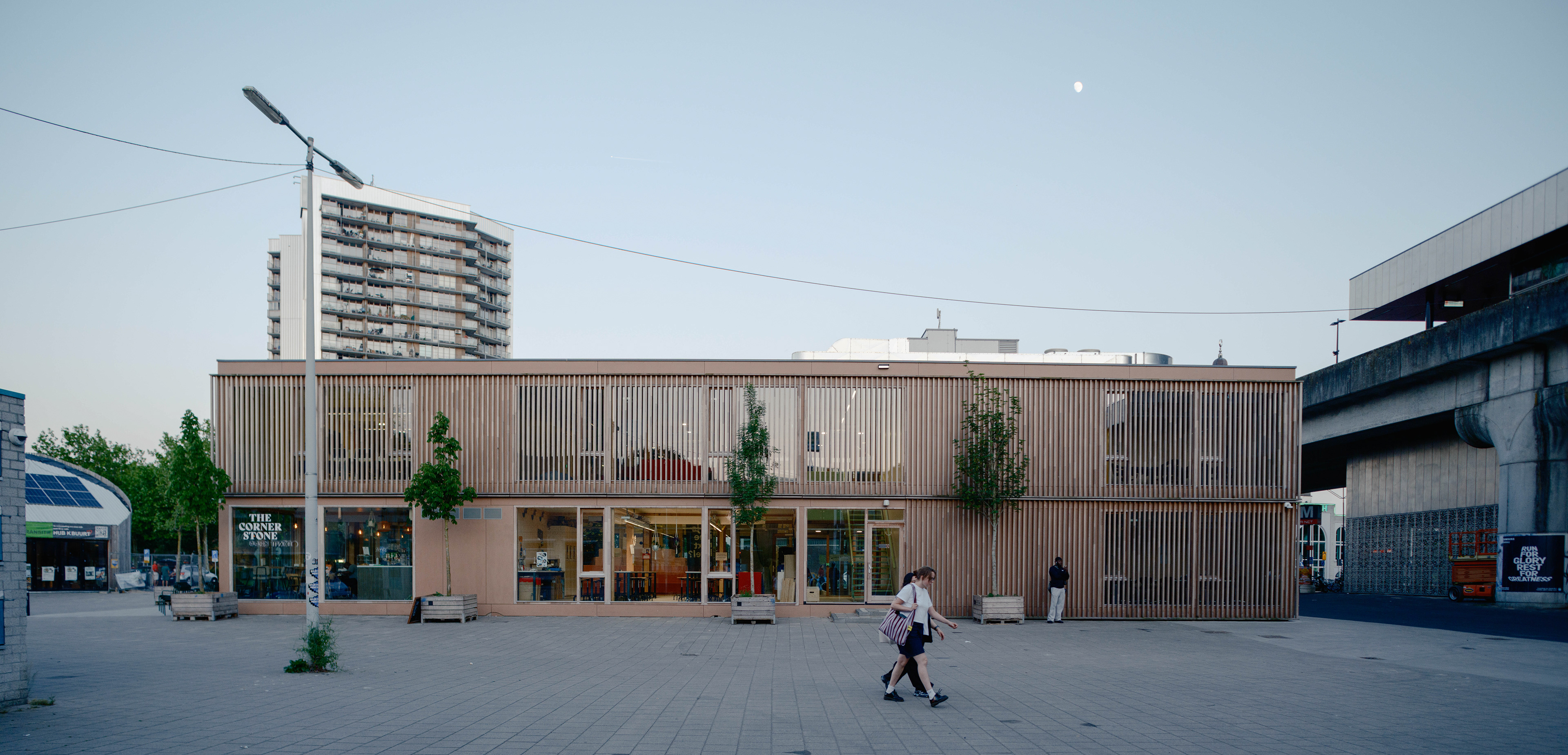
OBA next lab with makerspace opening to the backside